
The Heartfelt Journey of a Notary Serving in Hospice Care
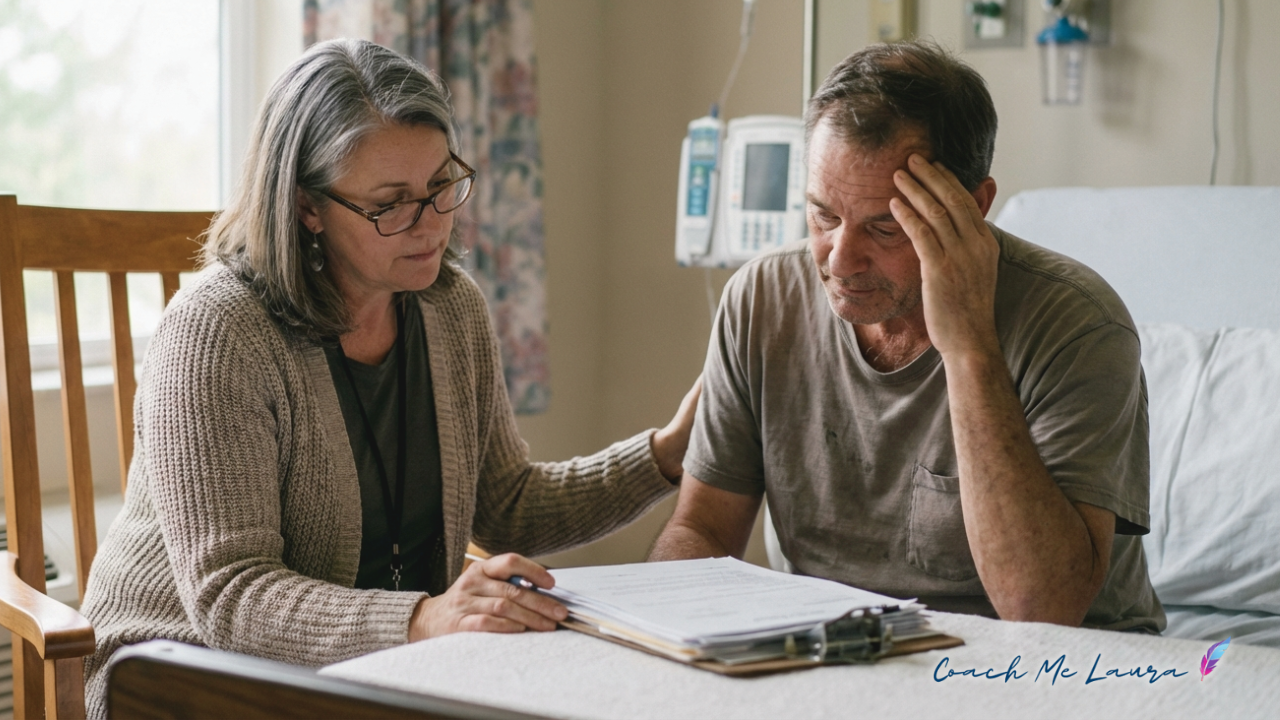
Some assignments stay in your journal.
Others stay in your heart.
This one did both.
I received a call to a hospice wing in a care facility. It was newly opened. Quiet. Tucked away. The kind of hallway where footsteps feel louder and time moves differently.
He was there alone.
The closest available bed had been more than 200 miles from his home. His wife could not travel. She was preparing for her own surgery. His adult children lived out of state. The only people coming and going were caregivers and a hospice nurse.
My first appointment was simple on paper. He needed to remove his name from the deed to their home, leaving his wife as sole owner.
He had the document prepared. It was neat. Organized. Ready.
He was not.
He told me about his leukemia. A few months, he said. He could still walk with a walker, but slowly. His balance was unsteady. His body had begun the quiet work of shutting down.
We completed the notarization. It was professional. Proper. By the book.
But before I left, I told him something I do not always say.
“I live close by. If you need anything beyond notarization, please ask.”
He did.
I returned several times over the next few months. Sometimes there were additional documents. Sometimes it was something small. Mailing a set of keys back to his wife. Bringing in a meal. Dropping something at the post office.
I was the only visitor from the outside world.
Each visit, he was a little weaker. A little slower. His hands shook more when he signed. His steps shortened. His voice softened.
But his mind was clear.
He would talk about his wife. About their home. About his business. About his kids. About friends. About decisions he had made and decisions he hoped were right.
I was not just notarizing documents. I was witnessing a life.
On one of my final visits, months into this quiet rhythm, he told me his wife had recovered enough from surgery to travel and see him.
He looked relieved in a way that is difficult to describe. He had held on long enough. He would see her again.
There was gratitude in the room that day. Not for me. For time.
I kept going when he called, even when it was hard. It is not easy to watch someone slowly deteriorate. It requires you to sit with reality without trying to fix it.
Until one day, there were no more calls.
That assignment changed me.
Not because I did anything extraordinary. I did not. I notarized documents properly. I showed up when asked. I listened.
But in those months, I understood something more deeply than ever before.
As notaries, we are invited into people’s most private moments.
We see them buying homes. Refinancing. Transferring property. Preparing trusts. Signing powers of attorney. We also see them in hospital beds. In hospice rooms. In living rooms where oxygen tanks hum quietly in the corner.
We can choose to treat each appointment as a transaction.
Or we can choose to see the human being in front of us.
Compassion does not mean overstepping. It does not mean counseling. It does not mean losing professionalism.
It means presence.
It means eye contact instead of rushing.
It means listening when someone wants to talk.
It means not being afraid of the setting.
Hospitals and hospice wings intimidate many notaries. I understand that. The environment feels heavy. The reality of mortality is not subtle there.
But if you have the opportunity to serve in those spaces, do not let fear stop you.
There is sacred work happening.
In those rooms, people are putting their affairs in order. They are protecting spouses. They are making final decisions. They are trying to ease the burden on the people they love.
Your calm presence matters.
Your competence matters.
Your willingness to show up matters.
That gentleman did not need me to solve leukemia. He needed a notary who would come when he called. Who would treat him with dignity. Who would not flinch at his walker or the hospice badge on the wall.
What I took from that experience was not sadness, though there was some. It was perspective.
I was allowed to stand witness to a life that mattered.
I was allowed to participate in those final administrative acts of love.
And I walked away taller.
As notaries, we have the chance to do more than notarize signatures. We can be steady when things feel unsteady. We can be respectful when someone feels vulnerable. We can serve without fear.
If you are drawn to this kind of work, or if you want to feel confident stepping into hospitals, hospice, and homebound environments, I wrote a resource for you.
The Compassionate Notary: A Field Guide to Signings in Hospitals, Hospice and the Homebound is available at www.coachmelaura.com/books.
Do not underestimate the impact of your presence.
You may think you are just completing a certificate.
But sometimes, you are the only visitor that day.
Sometimes, you are the last professional someone will ever call.
And sometimes, you will leave knowing you did more than your job.
You served another human being well.
That is work worth doing.
At your service,
Laura

Certified Notary Trust Delivery Agent
Earn Up To $250 Per Appointment Notarizing Estate Planning Documents
Did you know that every living trust package, in every state, requires 6-8 notarizations (or more)? An attorney is not required, but a notary is! Typical fees for "trust delivery" average $125-$250 per appointment.
If you're tired of low-ball signing appointment offers, being treated like a "dime-a-dozen" by escrow officers, driving all over town for minimal pay, printing hundreds of pages at your expense, or waiting for the federal government to lower interest rates?
Then becoming a Certified Notary Trust Delivery Agent (CNTDA) might be the next step in your notary career.
FREE DOWNLOAD
Hospital Notarization Guide
Are you trying to get into a hospital to provide notary service? Just add your name and email here and I'll send you my guide: "Steps to successful hospital notarizations" as well as a PowerPoint training you can use for medical staff.

Laura Biewer
Mentor / Coach
Based in Modesto CA, Laura has over 20 yrs experience as a mobile notary and Certified Loan signing agent. She has developed expertise in notary laws and regulations as a CA mandated training instructor. In addition, Laura is able to assist notaries in all 50 states with notary, marketing, networking and branding questions.
