
You are not the only one who doesn't know.
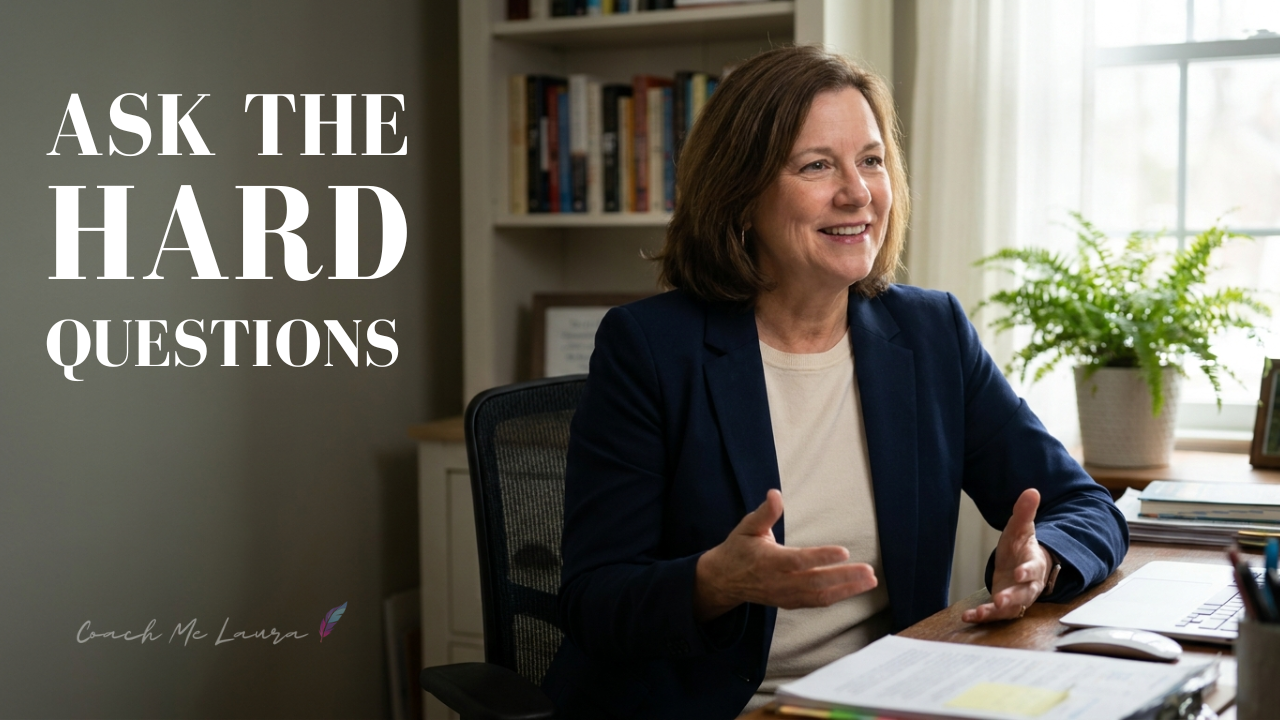
You’re Not the Only One Trying to Figure It Out
If you think you’re the only entrepreneur carrying a question you’re embarrassed to ask, let’s put that fear down right now.
Every entrepreneur has one: the concept they quietly hope no one asks about, the system they never fully learned but keep working around, or the inherited process they never questioned and now struggle to explain.
You are not behind. You are human—and your business will grow faster when you stop carrying that question alone.
Entrepreneurship often makes it look like confidence and competence are the same thing. They are not. You can run a strong business and still feel unsure about one part of it. Competence is not pretending you know everything; it is being brave enough to ask before the gap costs you.
The entrepreneurs I respect most ask questions often—not because they are inexperienced, but because they refuse to let pride outrank progress. I’ve sat with people running businesses bigger than mine who still say, “Explain it to me like I’m new here.” That is not weakness. That is one reason they are still building twenty years later.
The Real Cost of Staying Quiet
Every month you avoid the hard question is another month the problem keeps taking more than it should. Some business gaps could be closed in one honest ten-minute conversation. Let embarrassment delay that conversation for a year, and you have not avoided discomfort—you have paid for silence with time, money, and momentum.
Your business does not need you to protect your ego. It needs you to protect its future. When you choose clarity over pride, growth has room to move again.
Where Most People Get It Backwards
Here’s where many people get it backwards: asking the right question matters, but asking the right person matters just as much.
Somewhere between Google, Facebook groups, and group chats, it became easy to mistake confident opinions for real expertise: the cousin who “did something similar once,” the online thread guessing together, or the stranger whose certainty sounds useful but may not be grounded in experience.
An opinion is easy to find. Real business advice comes from someone who has built, broken, and rebuilt what you are trying to understand. Mistaking confidence for expertise is how capable entrepreneurs can make costly decisions while believing they are being careful.
Take the notary industry, where I work every day. Scroll long enough and you will hear the same oversimplified advice repeated with confidence: “All you need to do is know your state law.” It sounds simple. It sounds responsible. But it leaves too much out.
About 20 states do not require training before commissioning notaries, and some do not even provide a handbook. Even when states offer materials, they often provide statutes to interpret rather than clear guidance on how to perform the work. And when a handbook or class is available, it is usually designed to help you pass the exam—not to teach the practical application of the role.
So when someone says “just know your state law” is enough, they may not be trying to mislead you. They may simply be speaking from the limits of their own experience, their own state, and the training they never received. That is why confusing personal experience with expertise matters. It may not be dishonest, but it can still be incomplete—and incomplete advice can still cause real damage.
Do This This Week
1. Name the thing you’re pretending to understand. Say it out loud, even if only to yourself. You cannot close a gap you keep hiding from.
2. Find the person who has already solved it. Someone in your circle—or one connection away—has likely faced the problem you are trying to solve. Find them before you spend months learning the hard way.
3. Separate opinion from advice before you act. Ask: has this person actually done the thing, or are they simply comfortable talking about it? That question alone can protect you from expensive mistakes.
4. Ask the question you have been avoiding. Not to a search bar—to a person who has earned the right to answer it. The question gets lighter the moment you stop carrying it alone.
5. Choose one skill and close the gap. Not a complete overhaul. One skill, practiced once this month. Growth compounds when you take the next honest step.
Admitting what you don’t know is not a small thing. It is leadership. It keeps you honest, protects your decisions, and helps you build a business that can handle pressure because it is grounded in reality, not performance.
You Do not Have to Figure This Out Alone
That’s exactly why I created Laura’s Inner Circle (www.coachmelaura.com) and co-created TNT (marketing4notaries.com): free coaching calls where real questions get thoughtful, practical answers from people who have actually done the work—not from opinions dressed up as expertise.
Bring the question you have been holding back. Ask it in a room where the answer can help you move forward with more confidence.
You have got this. And you do not have to figure it all out alone.

Certified Notary Trust Delivery Agent
Earn Up To $250 Per Appointment Notarizing Estate Planning Documents
Did you know that every living trust package, in every state, requires 6-8 notarizations (or more)? An attorney is not required, but a notary is! Typical fees for "trust delivery" average $125-$250 per appointment.
If you're tired of low-ball signing appointment offers, being treated like a "dime-a-dozen" by escrow officers, driving all over town for minimal pay, printing hundreds of pages at your expense, or waiting for the federal government to lower interest rates?
Then becoming a Certified Notary Trust Delivery Agent (CNTDA) might be the next step in your notary career.
FREE DOWNLOAD
Hospital Notarization Guide
Are you trying to get into a hospital to provide notary service? Just add your name and email here and I'll send you my guide: "Steps to successful hospital notarizations" as well as a PowerPoint training you can use for medical staff.

Laura Biewer
Mentor / Coach
Based in Modesto CA, Laura has over 20 yrs experience as a mobile notary and Certified Loan signing agent. She has developed expertise in notary laws and regulations as a CA mandated training instructor. In addition, Laura is able to assist notaries in all 50 states with notary, marketing, networking and branding questions.
