
How a Notary Appointment Changed My Life and My Family Forever
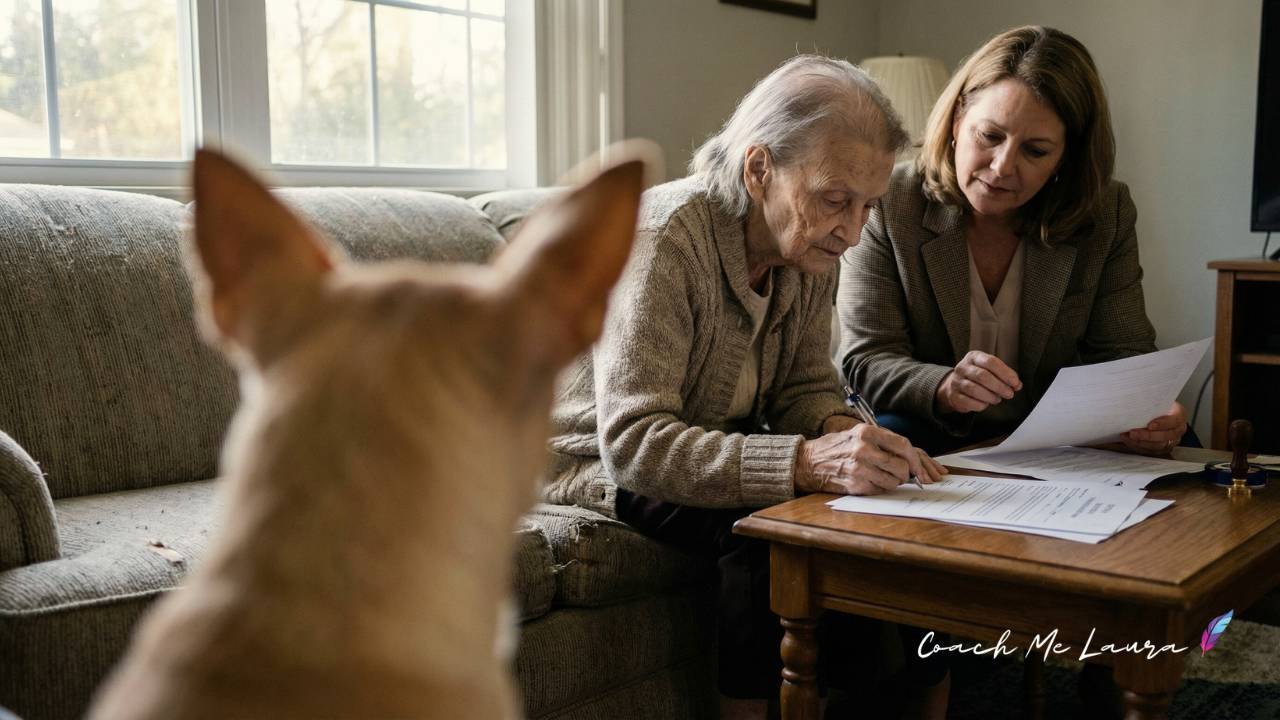
Have you ever taken your work home with you?
When people ask what I do for a living, I tell them I'm a public servant called a notary public, who serves the public and businesses properly execute their documents as a professional witness so they are accepted by a receiving agency and can be utilized for it's intended purpose. I specialize in trust delivery and estate planning work. What I don't always mention is how often this work takes me into hospitals, skilled nursing facilities, and hospice centers, places where people are facing some of the hardest moments of their lives.
Sometimes, being a compassionate notary means going beyond the notarization itself.
It might mean offering postage stamps when the facility doesn't have any and a document needs to be mailed. Or dropping something at the post office because the signer has no way to get there themselves.
Sometimes it means staying a little longer—just to sit and listen—especially when someone has no family or friends nearby to visit.
I once helped a hospice patient run a few errands while his wife was six hours away recovering from her own surgery. He had no one else, and I had the time. It wasn't in my scope of work. But it was the right thing to do.
These moments aren't billable. They're not part of the certificate I fill out or the journal entry I record.
But they're part of the work.
The Appointment That Changed My Life
A few years ago, I received a call to notarize a document at a local skilled nursing facility. It seemed routine.
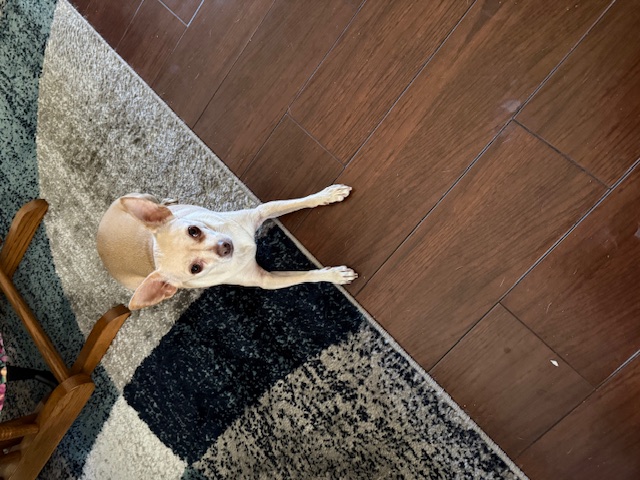
When I arrived at the room, I noticed a small blonde Chihuahua curled up at the foot of the bed, sleeping quietly next to the signer's legs. The little dog didn't lift her head when I walked in—she just opened her eyes briefly to look at me and stayed still.
The signer introduced her as Mia.
Then she told me why Mia was there.
"She's here so I can say goodbye to her," she said quietly. "I'm not going home after the fall I took. I can't keep her anymore."
That's when I noticed another woman standing a few feet from the bed. The signer introduced her as a representative from a local rescue organization.
And then she started to cry.
I had just lost my own 15-year-old Chihuahua, Lily, a little over a week earlier to cancer. The wound was still raw.
Standing there, watching this woman say goodbye to her beloved companion, I felt my own tears come. I understood exactly how hard it was to let go.
We talked for a while—about loss, about love, about how much these little souls mean to us even when the rest of the world doesn't always understand.
And then she stopped.
She looked at me with sudden clarity and said, "You're a sign from G-d. You're supposed to take my Mia home."
I was stunned.
I wasn't ready. I hadn't even considered replacing Lily. And I had another 12-year-old Chihuahua at home, Lucy, who I wasn't sure would accept a new dog, especially one as young and likely energetic as three-year-old Mia.
But the signer insisted.
The rescue representative, sensing my hesitation, said gently, "If you want to try, you can take her home. If your other dog doesn't like her, just call me and I'll come get her."
What could I do?
I completed the notarization. And I took Mia home.
The Homecoming
I was gone less than an hour, and returned home.
When I pulled into the driveway, my husband was in the front yard raking leaves. He looked up as I got out of the car—holding a dog in my arms.
"I thought you went to a facility to notarize a document," he said, bewildered. "Who is this?"
"This is Mia," I said. "Well, Mama Mia now—after my favorite musical."
I quickly added, "Don't worry. If she doesn't get along with Lucy, I have the rescue's card. We're not locked in."
But I already knew. I couldn't give her up.
Lucy was barking wildly from the bay window, watching me hold this strange new dog. My husband let her out, and I gently placed Mia on the ground.
Lucy ran over, sniffed her carefully, and within moments—started to play.
We had our answer. Mia was home.
Two and a Half Years Later
I've had Mama Mia for two and a half years now.
Last week, Lucy, my now sweet 14 year old, passed from a cancerous tumor. Mia was by her side until the very last day.
We don't know if we'll add another pet to our family. But we've left our hearts open for the possibility—for the right one to come along, just like Mia did.
Every day when I come home from work—even when it's late—Mia waits for me at the window. The moment my husband opens the door, she dashes to my car like a little bullet. Before I can even step out, she's there, and the second I open the door, she jumps into my arms.
She is the queen of her castle. And she is one of the greatest gifts I've ever received.
What This Work Really Means
That appointment started as a simple notarization. A signature. A certificate. Documentation.
But what it became was so much more.
A woman who could no longer care for the love in her life entrusted me with her most precious possession. She saw something in me that day—a kindness, a shared grief, a readiness I didn't even know I had.
And in return, she gave me Mama Mia.
This is the part of notary work that doesn't show up in training manuals or state handbooks. It's the part that requires us to be present—not just professionally, but humanly.
To see the person in front of us. To listen. To care.
And sometimes, to say yes when life offers us an unexpected gift.
I will never forget the woman who gave me hers.
Laura
This story, and others like it, are why I wrote The Compassionate Notary. Because our work isn't just about technical skill—it's about showing up with our full humanity in moments that matter most. If you've ever felt the weight of being present during someone's hardest day, or wondered how to bring both professionalism and heart to this work, the book explores what it means to do this work with compassion—and why that matters more than we might think.

Certified Notary Trust Delivery Agent
Earn Up To $250 Per Appointment Notarizing Estate Planning Documents
Did you know that every living trust package, in every state, requires 6-8 notarizations (or more)? An attorney is not required, but a notary is! Typical fees for "trust delivery" average $125-$250 per appointment.
If you're tired of low-ball signing appointment offers, being treated like a "dime-a-dozen" by escrow officers, driving all over town for minimal pay, printing hundreds of pages at your expense, or waiting for the federal government to lower interest rates?
Then becoming a Certified Notary Trust Delivery Agent (CNTDA) might be the next step in your notary career.
FREE DOWNLOAD
Hospital Notarization Guide
Are you trying to get into a hospital to provide notary service? Just add your name and email here and I'll send you my guide: "Steps to successful hospital notarizations" as well as a PowerPoint training you can use for medical staff.

Laura Biewer
Mentor / Coach
Based in Modesto CA, Laura has over 20 yrs experience as a mobile notary and Certified Loan signing agent. She has developed expertise in notary laws and regulations as a CA mandated training instructor. In addition, Laura is able to assist notaries in all 50 states with notary, marketing, networking and branding questions.
