
Being a Notary Is a Legal Office, Not Just a Business
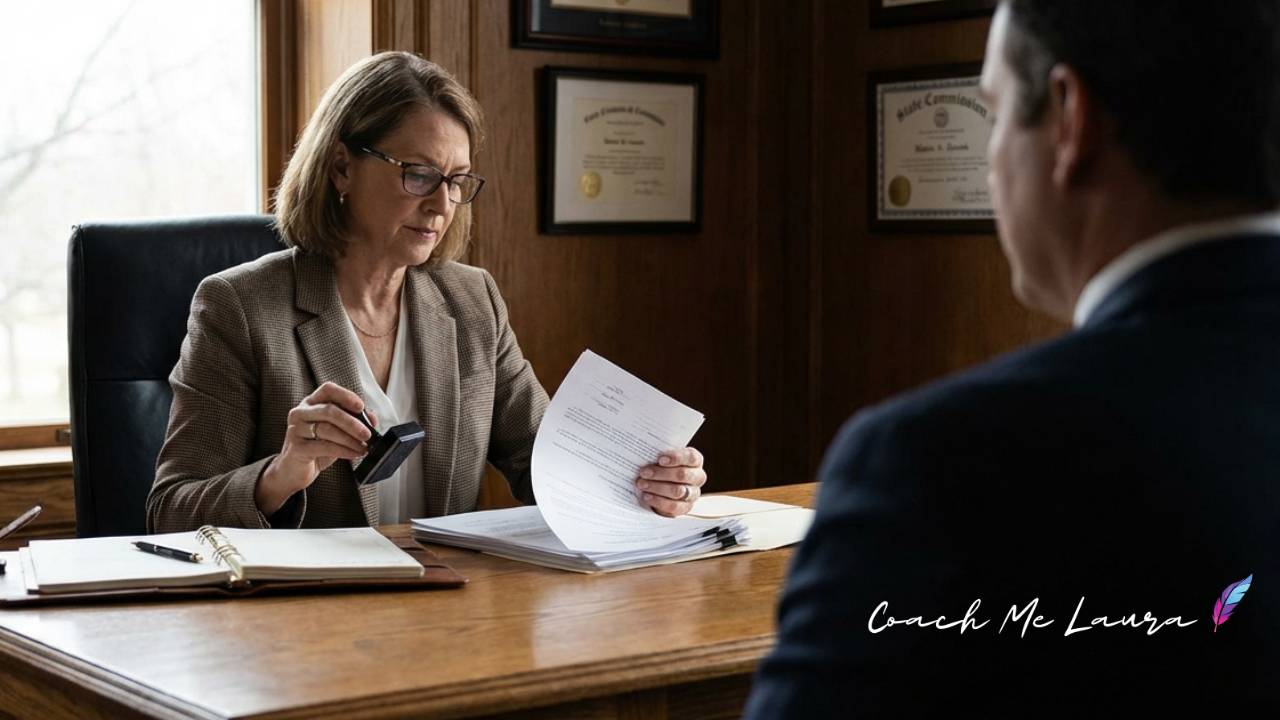
The Real Work of Being a Notary Starts After the Commission
Steve Jobs once said it's a mistake to believe that 90% of the work is coming up with a great idea. The real work, he explained, comes afterward, turning that idea into a product or service that actually works.
That insight applies perfectly to the notary profession.
In today's notary world, ideas are plentiful. Become a Loan Signing Agent. Add Apostilles. Specialize in Trust Delivery. Offer hospital or jail notarizations. Social media is filled with new paths, new titles, and new income streams.
But ideas alone do not build a sustainable notary business.
The notaries who last, those who earn trust, referrals, and long-term success, are the ones who do the 90% of the work that follows the idea. And that work begins with one non-negotiable foundation: competence in notarization and an unwavering commitment to the law.
Minimum Training Does Not Mean Minimum Responsibility
Many states require little to no formal training to become a commissioned notary. In some cases, a short application, a fee, and a basic exam are all that stand between an individual and a notary commission.
That reality can unintentionally create a dangerous misconception: that the notary's role is simple, low-risk, or purely administrative.
It is not.
The notary public is a public officer. The authority granted to you by the state carries legal weight, public trust, and real consequences. Whether your state requires three hours of training or thirty, your responsibility is the same: to uphold the law and protect the integrity of the notarization process.
Ignorance is not a defense. Lack of training does not excuse noncompliance. Once commissioned, the responsibility belongs to you.
Specialties Come Second. Notarization Comes First.
One of the biggest mistakes new notaries make is pursuing a specialty before mastering the fundamentals.
You cannot be an effective loan signing agent if you do not fully understand acknowledgments, jurats, identity verification, and proper journal practices.
You cannot serve as a trust delivery agent if you cannot confidently refuse improper requests or explain why a notarization cannot proceed.
You cannot handle Apostilles if your underlying notarizations are flawed.
Specialties are built on notarization. If the notarization is invalid, everything that follows is compromised.
Competence is not about memorizing a checklist. It is about understanding why the rules exist and applying them consistently, even when it's uncomfortable, inconvenient, or unpopular.
Integrity Is Knowing—and Communicating—Your Limits
Being a helpful notary does not mean saying yes to every request. In fact, true professionalism often requires saying no.
A notary who understands and communicates their limitations builds credibility. When you explain state requirements clearly, you send an important message to your client: I take this role seriously, and I will protect the validity of your document, even if it slows things down.
That kind of integrity reassures attorneys, families, hospitals, and courts. It signals that your work can be trusted.
Clients do not need a notary who bends rules. They need one who understands them.
Short-Term Money Is Never Worth Long-Term Consequences
Every notary will face pressure at some point.
A signer who is missing ID.
A document that isn't complete.
A family that "just needs this done."
A hiring party offering $100 or more to "make it work."
This is where character matters.
Breaking the law to complete an assignment does not make you resourceful. It makes you vulnerable. The potential consequences: fines, civil liability, criminal charges, loss of commission, and loss of livelihood—far outweigh any short-term payment.
No assignment fee compensates for the cost of defending your actions later.
The most successful notaries understand this: protecting the integrity of notarization protects their business, reputation, and future.
The Office of the Notary Is Bigger Than Any One Assignment
When you notarize a document, you are not simply witnessing a signature. You are participating in a legal process designed to deter fraud, protect vulnerable individuals, and ensure the authenticity of important acts.
That responsibility exists whether you are notarizing a simple affidavit or a complex estate plan.
Every compliant notarization reinforces public trust. Every careless one erodes it.
As a notary, you are not just running a business. You are holding an office that exists to serve the public good.
Doing the Real Work
The notaries who thrive do not chase shortcuts or titles. They are investing in understanding their role deeply. They study their state laws. They ask questions. They seek education beyond the minimum. They build their services on competence first, then specialization, then excellence.
Ideas will always be plentiful in this profession.
But success belongs to those willing to do the work that follows.
And that work begins, and never ends, with honoring the law and the integrity of the office of the notary.
There are many trainers to choose from; find one that focuses on, or at least includes, the fundamentals of notarization.
At your service,
Laura

Certified Notary Trust Delivery Agent
Earn Up To $250 Per Appointment Notarizing Estate Planning Documents
Did you know that every living trust package, in every state, requires 6-8 notarizations (or more)? An attorney is not required, but a notary is! Typical fees for "trust delivery" average $125-$250 per appointment.
If you're tired of low-ball signing appointment offers, being treated like a "dime-a-dozen" by escrow officers, driving all over town for minimal pay, printing hundreds of pages at your expense, or waiting for the federal government to lower interest rates?
Then becoming a Certified Notary Trust Delivery Agent (CNTDA) might be the next step in your notary career.
FREE DOWNLOAD
Hospital Notarization Guide
Are you trying to get into a hospital to provide notary service? Just add your name and email here and I'll send you my guide: "Steps to successful hospital notarizations" as well as a PowerPoint training you can use for medical staff.

Laura Biewer
Mentor / Coach
Based in Modesto CA, Laura has over 20 yrs experience as a mobile notary and Certified Loan signing agent. She has developed expertise in notary laws and regulations as a CA mandated training instructor. In addition, Laura is able to assist notaries in all 50 states with notary, marketing, networking and branding questions.
